
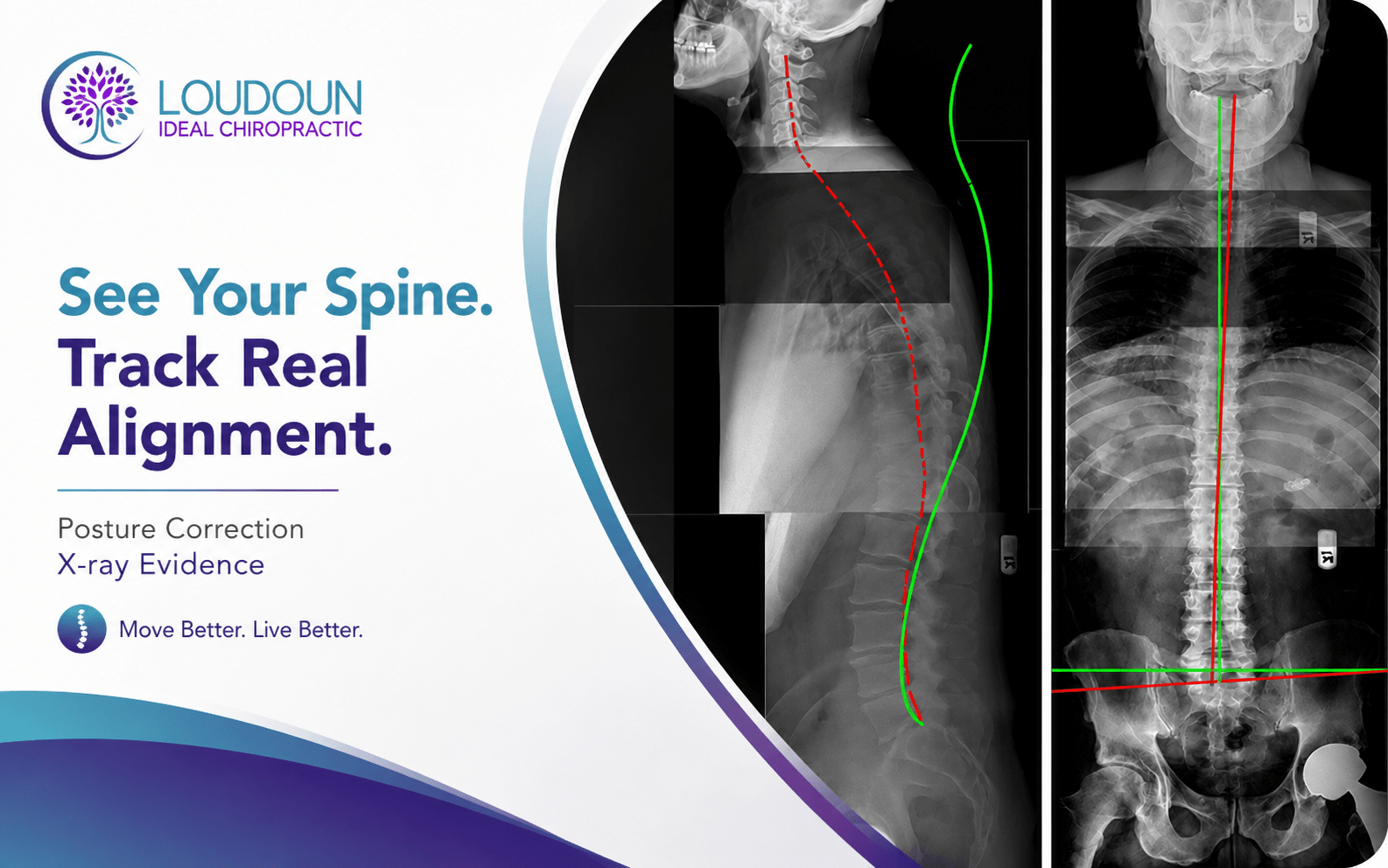
Posture Correction X-ray Evidence: Track Real Spine Progress
Have you been dealing with stubborn back ache that never seems to go away? Looking for real posture correction X-ray evidence helps you see if your spine sits in proper balance. Sitting at office desks all day pulls neck curves out of position slowly.
Many folks struggle with back stiffness because their bones shift without them knowing. This plain guide explains how spinal imaging works to track true physical changes. You will learn what initial images show and how proper care improves back health.
Checking Bone Angles and Real Alignment Proof
Getting clear pictures of your backbone shows exact structural angles. Simple imaging points out forward head leans and uneven hip lines fast.
- Neck Curve Angles: Measuring cervical curves in degrees shows if phone habits cause flat neck alignments.
- Forward Head Distance: Tracking millimeter shifts exposes how far your head rests in front of your shoulders.
- Side Spine Curves: Viewing a standing X-ray spine reveals hidden sideways curves or scoliosis patterns early.
- Pelvic Alignment Lines: Checking hip heights shows if uneven leg lengths tilt your lower spine sideways.
- Joint Space Gap: Looking between spine bones shows if aging discs press against delicate nerve paths.
Structural Spinal Testing and Patient Safety Steps
Taking picture tests of your spine requires smart safety rules and clear medical reasons. Understanding how imaging works gives you confidence during your first clinical assessment.
Asking About Initial Images
You might ask whether a chiropractor should take X-rays before treatment starts. Taking initial images gives your doctor a visual map of your underlying bone health. You can review standard X-ray radiation safety rules to learn how medical imaging works. Getting an initial picture ensures safe care and rules out underlying bone issues. Knowing what lies beneath the surface prevents improper force on damaged joints.
Understanding Out-of-Pocket Costs
Patients often ask about the average chiropractor X-ray cost at local offices. Prices usually range between fifty and two hundred dollars depending on insurance coverage. Finding a chiropractor with X-rays on site saves you extra travel time and keeps testing smooth. Having in-house equipment allows immediate adjustments to your care plan based on real findings.
Finding Local Care Facilities
Searching for chiropractors that take X-rays near me connects you with trained structural clinics. Having proper gear on site means your doctor reviews images during your first visit. Fast results help you begin targeted relief care without waiting days for third-party imaging centers.
Evaluating Medical Proof and Clinical Research
Understanding what clinical picture tests show helps you make smart choices for your spine. Seeing objective data removes guesswork from your recovery journey.
- Bone Alignment Rules: Imaging clearly shows bone structures, but images cannot capture soft muscle tissue or ligament strain patterns directly.
- Pain Level Connections: Bone alignment numbers do not always match how much pain a person feels daily, meaning functional care remains essential.
- Uncovering Hidden Risks: People wonder: can a chiropractor see cancer on X-ray scans during checks? Doctors review images carefully to spot abnormal bone growths or fractures right away.
- Spotting Deception Claims: Patients sometimes ask whether chiropractors lie about X-rays to sell care plans. Honest doctors show you exact line measurements so you see your own progress clearly.
- Comparing Progress Images: Reviewing an X-ray before and after chiropractor care shows real structural curve improvements over time, offering objective proof of physical change.
Simple Habits for Daily Back Health
Building strong spine habits requires daily movement along with professional checkups. Consistency in daily posture care stops routine strain from building up over time.
Home Movement Routines
Doing simple chin tucks and shoulder squeezes strengthens deep neck muscles. These small movements counter the forward pulling force of daily screen exposure. You can also try a posture corrector Karachi-style brace for short home reading sessions to support upper back muscles.
Shopping for Support Gear
Checking the posture corrector price in the Pakistan market shows many affordable brace options online. Looking for a posture corrector Pakistan seller gives local options for home health gear. Buying products on posture corrector Daraz listings offers quick delivery for simple daily supports that keep you upright while working.
Exercise Center Training
Adding posture correction exercises on gym days builds strong upper back muscles. Doing lat pulldowns and row movements pulls rounded shoulders back into natural alignment. Strengthening your postural core helps maintain healthy spinal curves long after leaving the clinic desk.
What Posture X-Rays Show vs. What They Miss
- What Posture X-Rays Show vs. What They Miss: X-rays show your bone structure by using degrees to measure cervical curvature, millimeters to measure forward head translation, and they can detect structural problems like scoliosis. Because the technology cannot show images of tissues, discs, neurological pathways, musculature, or ligaments, it will miss those areas. Even a very strong positive correlation does not mean that having a good posture prevents the pain, since pain and posture aren’t really linked.
- Opinion of Physicians Regarding the Need for Routine Imaging: Major health bodies agree that people generally should not be exposed to repeated X-rays to monitor routine postural adjustments or small curve changes for radiation health reasons and costs. X-ray imaging is only recommended for patients with serious deformity problems such as progressive scoliosis and trauma and specific red flags such as unexplained weight loss, major neurological signs, and night waking pain.
- Professional Advice: It is advised to first have a complete functional physical examination, which includes physical therapy, targeted exercise, and ergonomic modification, as the major approach to reducing pain and improving one’s movement. Do not accept routine X-ray series offered by any clinic that forces patients to pay a large sum for a whole set of follow-up X-rays in advance just to “prove” the changes in the numerical form of their posture, because in most cases the true clinical outcome will depend more on how you feel and move than on conforming to a perfect geometric posture.
Understanding Complex Spine Changes
Checking posture correction X-ray evidence gives visual proof when fixing complex neck curves. Many desk workers develop flat necks from looking down at screens for hours every day. Rebuilding these natural curves takes steady time, gentle care, and proper home stretches.
Comparing initial images with follow-up checks proves if your spine is responding to care. Seeing real structural improvements on screen gives you confidence in your recovery plan. Combining professional care with daily home movements protects your back joints for years to come.
Taking care of your spine early stops minor alignment issues from becoming long-term physical problems. Simple checks today keep you moving freely and living without constant back pain.
Long-Term Benefits of Structural Realignment
The long-term advantages for health when you restore your spine to its natural alignment are beyond mere pain relief. The even distribution of weight over your joint surfaces keeps them from developing osteoarthritis, as long as your bones are sitting in balance. Half of the proper structure will better disperse constant tension on adjacent muscles and ligaments, freeing up physical energy required for running through daily deeds.
In addition, ideal spinal positioning facilitates maximum function of the nervous system through reduction of mechanical stress on neural structures. Individuals who correct structural imbalances often notice improved lung capacity, reduced tension headaches, and more energy during exercise. Committing to an organized care plan employing soft adjustments, supplementary exercises, and ergonomic alterations provides your body the layout it needs to remain healthy as you get older.
How Loudoun Ideal Chiropractic Can Help
Loudoun Ideal Chiropractic uses posture correction X-ray evidence to guide gentle spine care for local families. Dr. Miok Hyoun brings over twenty years of clinical experience, providing measurement-based care in Lansdowne. Our team takes digital X-rays to find structural root causes instead of just treating surface pain.
We build personalized care plans that correct bone alignment and prove your physical progress clearly. Learn more about our background on our Dr. Miok Hyoun, DC page or visit our main Loudoun Ideal Chiropractic home page to see our full list of health services. Call 571-707-8639 today to schedule your complete spine assessment.
Conclusion
Looking at real bone alignment proof helps you understand your spine health clearly. Combining visual picture tests with gentle physical care restores natural curves and reduces daily stress. Simple daily habits keep your back strong and mobile. Call our Lansdowne clinic today to book your personalized spine review.
Frequently Asked Questions
Can chiropractors actually fix posture?
Yes, chiropractors help fix posture by applying targeted spinal adjustments, prescribing corrective exercises, and re-training muscle habits to restore natural bone alignment over time.
Why do doctors discourage chiropractors?
Some medical doctors discourage chiropractic care due to historical differences in training philosophies, concerns over aggressive spinal manipulation, or worries about unnecessary repeat X-ray imaging.
Are chiropractic scans accurate?
Digital chiropractic scans and standing X-rays offer accurate measurements of bone angles, standing posture shifts, and structural spinal curves when performed by trained clinical staff.
Can a chiropractor fix cervical kyphosis?
Yes, chiropractors trained in structural correction techniques use specialized traction, gentle adjustments, and neck exercises to help restore natural forward curves in cervical kyphosis cases.
What happens if cervical kyphosis is left untreated?
Leaving cervical kyphosis untreated can cause chronic neck pain, severe muscle strain, early joint degeneration, tension headaches, and increased pressure on delicate spinal nerves over time.