
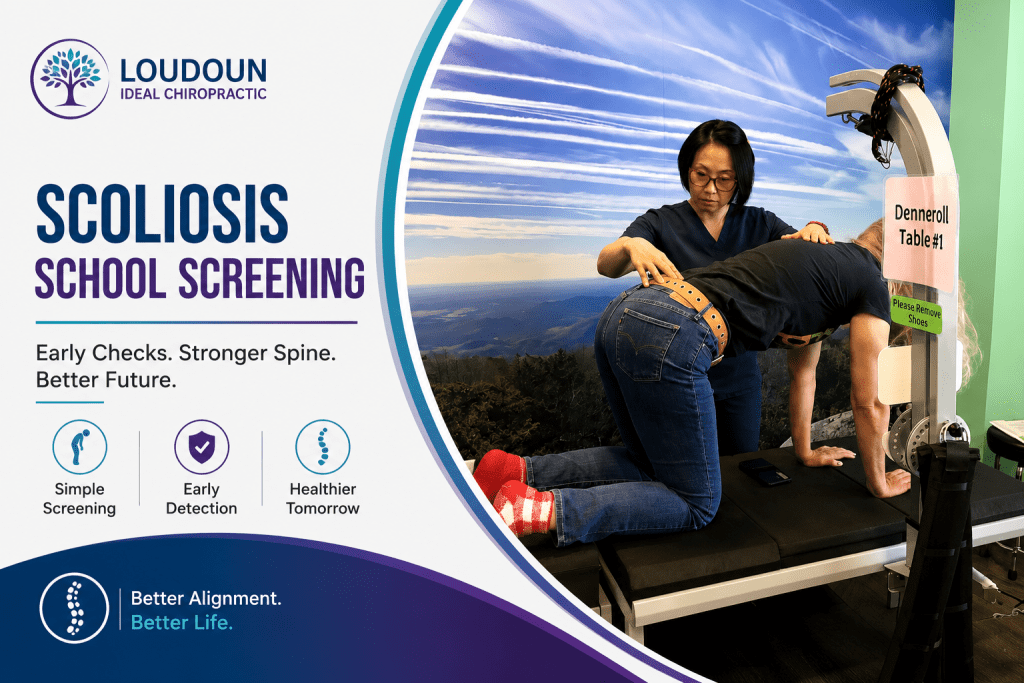
Scoliosis School Screening for Child Back Health
Have you noticed your child carrying their heavy backpack unevenly? Learning about scoliosis school screening helps parents spot early back curves. Many middle school kids grow very fast during summer months. Rapid growth spurts can make hidden spinal twists worse quickly. Early visual checks catch small posture changes before pain starts. This guide explains how nurses check children on school grounds. You will learn what steps protect your child’s back.
Spinal curves often show up between ages ten and fourteen. Children rarely feel pain when these back curves first form. Parents might miss subtle shoulder shifts under loose summer shirts. School health programs offer quick visual checks during physical classes. Catching curves early gives families better non-surgical care paths.
Understanding these early checks helps reduce stress for your family. Nurses perform these gentle tests in quiet school clinic rooms. The simple forward bend test reveals hidden rib humps clearly. Knowing what happens keeps your child calm during test day. Let us explore how these simple school tests protect kids.
Key Visual Checks in Nurse Screening Programs
School nurses use clear steps to spot early spinal changes. Simple posture tests show subtle curve signs in growing children.
- Scoliosis school screening: Quick visual tests help nurses find early back curves safely.
- Scoliosis screening at school age: Regular checks catch fast-growing spine changes in young teenagers.
- Why did schools check for scoliosis: Public programs started early checks to prevent severe adult back issues.
- Scoliosis screening guidelines: Health rules tell nurses which middle school grades to check each year.
- Scoliosis screening position: Students stand straight, then bend forward to show their back outline.
Nurses look at shoulder height while kids stand facing forward. They check if one hip sits higher than the other. Subtle waistline shifts give early clues about spinal rotation.
Checking rib alignment reveals hidden curves during forward bending movements. Early notes help parents schedule proper doctor evaluations quickly. Simple school visits protect growing children from long-term posture damage.
Steps Nurses Take During Student Body Checks
Nurses follow set routines when testing kids at school. These simple checks take less than three minutes per student.
Standing Posture Check
Students stand straight with feet together on the floor. Nurses look at shoulder level from behind the child. They check if arms hang at equal lengths naturally.
- States that require scoliosis screening: Many regional laws require annual back checks for middle schoolers.
- Scoliosis screening X-ray: Clinical X-rays verify exact curve angles after school nurses send notes.
Forward Bend Test
The student bends forward at the waist with straight legs. Arms dangle loosely toward the floor without touching their toes. Nurses look down the back to spot rib unevenness.
- Scoliosis screening form: Written forms record student visual scores for school medical files.
- Scoliosis screening tool: Simple scoliometers measure rib hump tilts during forward bend checks.
Recording Visual Results
Nurses write down any uneven findings on school health cards. They mark specific spots like high shoulders or uneven hips. Clear records help family doctors review back changes later.
Student Privacy Precautions
Screening rooms keep students private during their quick back check. Boys and girls test in separate spaces with care. Nurses keep the experience comfortable for every growing child.
Parent Notification Letters
Schools mail physical letters home if nurses spot any unevenness. These notes explain what the nurse saw during screening. Letters ask parents to visit their family doctor for evaluation.
Real Clinical Cases in Student Screenings
Studying real screening cases shows how early checks protect children. Nurses handle many different situations during annual school posture reviews.
Case 1: Early Detection in Middle School
A school nurse scoliosis screening case study shows early catch benefits. A 12-year-old girl showed an uneven waistline during 7th-grade checks. Her parents took her to a spine expert right away. Early brace care prevented her curve from getting worse.
Case 2: Nurse Assessment Training Practice
A nurse is performing a screening for scoliosis on a school-age child during a health fair. The nurse observes a five-degree rib hump on the right side. Proper training helps nurses spot tiny shifts before posture changes grow.
Case 3: Nursing Exam Review Scenarios
In a school nurse scoliosis screening hesi case study, nurses learn referral steps. They practice identifying severe rib rotation during forward bend tests. Nursing exams stress fast parent contact after finding spinal shifts.
Case 4: General Student Health Reviews
Every school nurse scoliosis screening aims to keep children healthy. Nurses check hundreds of students during busy fall school terms. Their dedicated work catches silent spine shifts in growing kids.
Case 5: Nursing Board Test Questions
Studying HESI school nurse scoliosis screening material prepares nurses for school duty. Test questions focus on proper Adam forward bend positioning. Correct positioning ensures accurate rib hump measurement every single time.
Case 6: Clinical Screening Observations
A nurse is performing a screening for scoliosis on a school-age child in class. The nurse checks shoulder blade balance while the child stands. Quick visual checks keep screening lines moving smoothly for students.
Case 7: Age Appropriate Checks
Planning scoliosis screening at school age targets peak growth periods. Checking kids between ages ten and fourteen yields best results. Early detection gives families more non-surgical treatment options to consider.
Case 8: Screening Personnel Duties
The scoliosis screening in school children is done by trained nurses. Some districts use physical education teachers trained by state health staff. Proper training keeps visual screening results accurate across all schools.
Case 9: Study Review Materials
Reviewing school nurse scoliosis screening Quizlet guides keeps nurse skills fresh. Online flashcards cover visual checks and proper referral paperwork rules. Well-trained health workers protect student back health across communities.
What a School Screening Involves
A school scoliosis screening is essentially a visual screening method done by a nurse that takes very little time in searching for any signs of abnormal curvature of the spine in very young ones, mostly around 10 to 14 years old. The person conducting the screening will visually locate irregular shoulders, a raised prominence of a shoulder blade, and/or a raised hip while a student is standing and bending forward.
Process of Screening
- Posture assessment: When standing erect, the child is examined by the nurse in all directions for their back, shoulder and hip area.
- Bending Forward: With their feet together and arms hanging down, the child bends forward at the waist.
- Checking for imbalances: The nurse examines if one shoulder of the upper back or the lower ribs is higher than the other.
Age Groups and Requirements
- Focusing on ages 10 and 14: Scoliosis is commonly diagnosed in this interval that contains adolescent growth spurts.
- State and Local Guidelines: The criteria differ by place; some states or districts require mandatory checks only for certain middle school grades, whereas others do not so.
What Happens After Receiving the Referral
- No Medical Certainty: A referral given by a school-based screening cannot be a definitive diagnosis of scoliosis, only that the nurse made a note or a referral. This indicates that they only observed some discrepancy.
- Different Courses of Action: Parents should arrange a consultation with a pediatrician or other pediatric health professionals to find out a clear diagnosis and confirmation.
Diagnostic Tests After School Screenings
School checks only find visual signs of uneven back posture. Family doctors use precise tools to verify actual bone curves.
Digital X-Ray Examination
Doctors take standing X-rays to see full spine bone structures. X-rays show exact curve degrees using standard Cobb angle measurements. According to Spinal Column Data, adult spines have natural curves, but side curves show scoliosis.
Physical Posture Assessments
Doctors test back flexibility and leg length balance in office rooms. They check reflex responses to ensure nerves work properly. Detailed physical tests confirm if curves come from bone shapes.
Scoliometer Measurement Readings
Physicians use hand tools to measure rib hump angles precisely. Scoliometers show rotational degrees when kids bend forward at the waist. Readings over seven degrees usually call for detailed X-ray scans.
Comparing Options for Student Spine Health
Parents often wonder what steps to take after nurse notes. Comparing common care paths helps families make safe decisions fast.
School nurses find early clues through simple visual inspections only. Pediatricians confirm if back curves need real medical attention today. Chiropractors focus on joint alignment and soft tissue relief safely. Physical therapists teach specific exercises to build core back strength.
Ignoring early nurse notes can let mild curves grow larger. Unchecked curves can cause back pain during adult working years. Proper evaluation keeps your child active in sports and play. Early action keeps treatment gentle and non-invasive for growing kids.
How Loudoun Ideal Chiropractic Can Help
Loudoun Ideal Chiropractic can help you with your child’s spinal health. Dr. Miok Hyoun brings over twenty years of experience in Lansdowne. She holds advanced training in Chiropractic BioPhysics and Webster methods. Our team uses measurement care to fix root causes of posture issues. We perform full spinal checks, posture checks and digital scans.
We help families move better without surgery or pills. Dr. Miok builds custom care plans for your specific health goals. Our gentle care restores natural balance and relieves nerve stress. Learn more about our team on our Dr. Miok Hyoun, DC page to view practitioner details. Call 571-707-8639 to schedule your child’s full spine check.
Conclusion
A scoliosis school screening offers early detection for growing children. Nurse notes give parents timely warnings about minor back curves. Visiting a doctor confirms if your child needs gentle posture care. Early checks protect your child’s spine as they grow taller. Call our office today to schedule a full back check.
FAQs
Do schools check for scoliosis anymore?
Many states still require annual school checks for middle schoolers. Some districts stopped due to budget changes or private doctor visits.
What is scoliosis screening at school?
It is a quick visual posture check done by nurses. Nurses look for uneven shoulders, hips, or rib humps during bends.
When should kids be screened for scoliosis?
Children should get checked between ages ten and fourteen years old. This age window covers major growth spurts in young teenagers.
Why did schools used to check for scoliosis?
Schools started checks to catch back curves before severe growth. Early findings allowed non-surgical care like bracing to work better.
What should kids with scoliosis not do?
Kids should avoid heavy contact sports that strain the spine. Avoid repeated backward bending or heavy weighted lifting without guidance.