
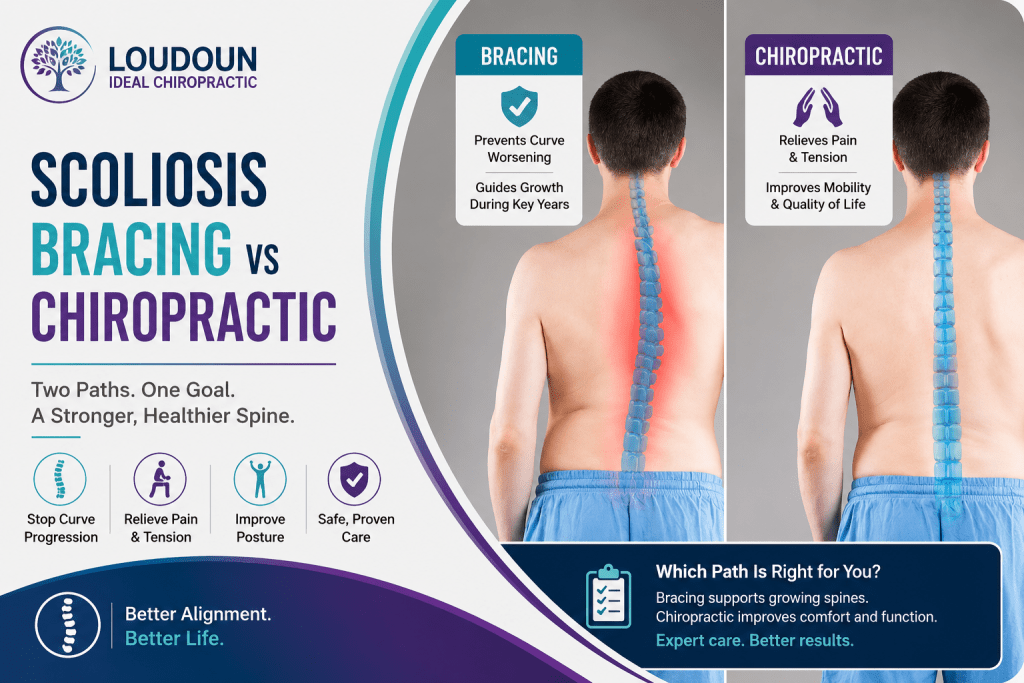
Scoliosis Bracing vs Chiropractic: What Works Best for Your Spine?
Have you ever worried about a curve in your spine? Finding the right path for scoliosis bracing vs chiropractic care can feel confusing when you first look at options. Many parents face this choice during routine spine checks.
A growing spine needs proper care to avoid future problems. Rigid braces hold soft bones straight as children grow fast. Chiropractic care offers quick relief from daily back stiffness. This guide breaks down both choices for your family.
Comparing Spinal Bracing and Chiropractic Care
How are scoliosis bracing and chiropractic care different? While bracing is a medical intervention primarily for halting the progression of a curve in a developing individual, chiropractic care is designed to address pain, restore range of motion in joints, and increase overall quality of life. However, the same treatment interventions can at times include bracing exercises.
Comparison of Core Approaches
| Feature | Scoliosis Bracing | Chiropractic Care |
| Primary Goal | Prevent curve worsening during skeletal growth | Relieve pain, ease muscle tension and improve mobility |
| Main Target Group | Growing children and adolescents (moderate curves, 25°–40°) | Adolescents and adults dealing with stiffness or discomfort |
| Structural Impact | Mechanically guides spinal growth to halt progression | Does not cure or reverse structural curves on its own |
| Medical Consensus | Backed by orthopedic guidelines for growing spines | Viewed as supportive, symptomatic care rather than a standalone structural fix |
Scoliosis Bracing
- How does it work: Bracing involves placing gentle and continuous pressure on the child’s body and spine. This pressure works to reduce the rate at which a curve can grow.
- When is it typically prescribed? The scoliosis curve brace is usually fitted to children and teenagers whose spines are still growing. Braces are also best suited for individuals whose curves are moderate – ranging between 25 and 40-degrees.
- What are the drawbacks? A brace doesn’t cure the curvature, nor does it decrease the size of a curve. Instead, it stabilizes it so the curve doesn’t grow bigger. In addition, patients need to wear the device for 18 hours or longer each day. This can be cumbersome and feel uncomfortable for the patient.
Chiropractic Care
- How it works: Applies manual manipulation of the spinal joints, manual soft tissue mobilization techniques and targeted exercise rehabilitation.
- What it’s for: Beneficial for adolescents and adults who develop secondary muscle tightness or joint stiffness around the neck or back.
- Limitations: Traditional chiropractic manipulation has its limits as far as correcting structural spinal curvature, as it does not involve structural change. Spinal curves that are either severe or structural should not be forced.
Recommendations
- As to where to begin, you may want to consult an orthopedic spine surgeon or a pediatric orthopedist. They will be able to measure your curve in degrees (called the Cobb angle) and determine your skeletal maturity.
- If you have a growing child with a moderate curve, orthopedic bracing is the gold standard of care. Meanwhile, if you are an adult who needs help managing your back pain and discomfort, a licensed chiropractor will be able to help you with that.
- Some conservative treatment programs offer a combination of specialized exercises, specific bracing, and a gentle approach of non-force chiropractic adjustments. However, such treatment options should complement orthopedic care, not replace it. Avoid any practitioner advertising a “miracle cure” for structural scoliosis and guaranteeing a complete reversal of your Cobb angle by chiropractic adjustments only.
Reasons Doctors Recommend Scoliosis Bracing
Orthopedic doctors often pick hard shells for young kids. Here are five simple reasons braces remain common.
- Scoliosis bracing vs chiropractic: Hard plastic shells press firmly on the rib cage. They stop curves from worsening during sudden growth spurts.
- Curve Control: Soft, growing bones bend easily like green plant stems. Braces guide them to grow in a straighter line.
- Growth Guidance: Braces keep spine curves under forty degrees overall. This step helps kids avoid heavy back surgery later.
- Is chiropractic safe for scoliosis? Groups like the Scoliosis Research Society support bracing for kids. Decades of patient testing prove these devices work well.
- Custom Fit: Modern body scanners build each shell for one child. The thin plastic fits easily under normal school shirts.
How Chiropractic Adjustments Help Manage Scoliosis Pain
Chiropractors look at how your body moves each day. They use gentle physical adjustments to soothe daily aches.
Easing Tight Muscles
Curved spines pull back muscles in uneven ways today. One side stays tight while the other side stretches. Hands-on therapy relaxes stiff muscle groups near ribs. Soft tissue work calms overworking areas.
Improving Joint Motion
Stiff spinal joints make simple bending hard work. Gentle adjustments restore movement to tight joint spaces safely. Better movement helps you bend and walk without pain. You can move with more freedom.
Teaching Safe Movement
Good clinics teach simple home movements for daily use. Strong core muscles support your ribs and hips well. Simple routines keep joints loose and free from pain. Daily habits protect your posture.
Signs You Might Need Chiropractic Care for Scoliosis
Adults with curved spines often feel heavy physical strain. Here are five signs gentle care offers relief.
- Can a chiropractor make scoliosis worse? You wake up with a tight lower back. Gentle adjustments loosen stiff joints before your morning work.
- Uneven Shoulder Height: One shoulder sits higher than the other side. Physical care helps balance your body stance over time.
- Scoliosis chiropractor before and after: Sharp spasms hit your lower back muscles often. Soft tissue work calms stressed muscle groups down quickly.
- Hip Discomfort: Curved lower spines tilt hip bones to one side. Balancing hip motion cuts down on daily walking pain.
- Chiropractic and scoliosis research: Bending down to tie shoes feels harder now. Targeted physical care keeps your spinal joints moving freely.
Safety and Research Around Scoliosis Care
Safety comes first when dealing with spinal curves daily. People ask: Is chiropractic safe for scoliosis? Yes, when done by trained professionals using gentle hands.
What Research Says
Current chiropractic and scoliosis research shows adjustments help with short-term pain. Studies show adjustments ease joint stiffness without moving bones.
Knowing the Safety Limits
People often ask: can a chiropractor make scoliosis worse? Forceful twisting on hard curves causes extra muscle strain. Safe providers use light instrument tools instead of force.
Post-Surgery Considerations
Patients ask: can you go to a chiropractor if you have scoliosis surgery? Yes, but doctors must avoid all fused segments. Care focuses only on loose joints above or below.
Real World Results and Long Term Expectations
Looking at scoliosis chiropractor before-and-after posture photos requires clear eyes. X-rays show better posture and less muscle strain. But hard bone curves remain mostly the same shape.
Adults asking whether chiropractic can help scoliosis in adults find good news for pain. Care will not reverse bone curves after growth stops. But it lowers daily pain and keeps you active.
If you search for a scoliosis chiropractor near me, pick a clinic with structural care. Ask them how often you should see a chiropractor for scoliosis. Most people start with two visits a week.
Practical Daily Habits for Back Support
Living with a curved spine requires small daily changes. Simple care steps protect your back while you work.
Workspace Setup
Position your computer screen directly at eye level today. Use a chair that supports your low back well. Take short walking breaks every thirty minutes to stretch.
Core Exercise Steps
Building deep stomach muscles supports your lower back joints. Light planks and bridge movements build safe core strength. Avoid heavy overhead weight lifting during your routine workouts.
Safe Sleeping Positions
Place a small pillow between your knees when sleeping. Side sleeping keeps your lower spine in neutral lines. Avoid sleeping flat on your stomach to protect necks.
Understanding Spinal Curve Growth
Spine curves can shift quickly during early youth years. Paying close attention to body changes helps parents act.
Recognizing Early Visual Signs
Look at your child while they stand up straight. Check if their shirt hangs unevenly on one side. Watch for one hip bone sticking out further today.
Importance of Cobb Angle Tracking
Doctors measure spine curves on clear digital picture scans. A Cobb angle measures the exact tilt in degrees. Numbers over twenty degrees need careful visual checks often.
Role of Core Strength
Weak core muscles allow spine curves to shift more easily. Daily core work builds strong muscular walls around ribs. Strong muscles hold your posture better during long days.
Choosing Between Braces and Chiropractic Care
Picking the right care depends on age and growth. Here is how families choose the right physical path.
Age Factors
Kids with soft growing bones need rigid bracing support. Their bones bend like young trees during growth spurts. Adults with hard bones benefit more from joint care.
Curve Severity
Minor curves under twenty degrees need light exercise routines. Moderate curves up to forty degrees require rigid braces. Severe curves need evaluation by an orthopedic spine surgeon.
Goal Setting
Bracing aims to stop bone curves from getting larger. Chiropractic care aims to lower daily muscle soreness safely. Define your goals clearly before starting any physical plan.
Long-Term Care Guidelines for Families
Consistency plays a major role in spine health. Following your care plan keeps back joints moving well.
Sticking to Bracing Schedules
Wearing a brace for prescribed hours gets good results. Skipping hours lets growing bones bend the wrong way. Parents should support kids during their daily bracing routine.
Regular Physical Checks
Schedule regular spinal checks to monitor your posture changes. According to Wikipedia Spinal Column Data, natural spine alignment supports body structure. Keeping track of changes prevents sudden pain flare-ups. Check out our Scoliosis Treatment options for more details.
Staying Physically Active
Avoid sitting still for long periods during the day. Walking and light swimming build strong back muscles. Active bodies manage spinal strain better over time.
How Loudoun Ideal Chiropractic Can Help You
Loudoun Ideal Chiropractic helps you with non-surgical back care. Dr. Miok Hyoun brings over twenty years of experience. She works in Lansdowne and has helped many people. She has advanced training in Chiropractic BioPhysics methods. Our team uses objective checks to fix root causes. We perform full posture checks and digital image scans.
We help families move better without surgery or pills. Dr. Miok builds custom care plans for your goals. Our gentle care restores natural balance and eases stress. Learn more on our Dr. Miok Hyoun, DC page to view details. Call 571-707-8639 to book your spine check.
Conclusion
Choosing between scoliosis bracing vs chiropractic care depends on age. Bracing protects growing children from worsening bone curves. Chiropractic care helps adults manage pain and move better. Talk with a medical expert to pick your path. Call our office to set up an appointment.
Frequently Asked Questions
Do chiropractors actually help with scoliosis?
Yes, chiropractors help manage back pain and stiffness. They use gentle adjustments to improve joint movement. But they cannot straighten permanent bone curves.
What are the disadvantages of wearing a scoliosis back brace?
Back braces feel hot and uncomfortable at first. Kids must wear them many hours each day. They can also cause skin irritation and weak muscles.
Is it better to see a chiropractor or physical therapist for scoliosis?
Bracing suits growing children with progressive curves best. Physical therapists teach specific curvature exercises for core strength. Chiropractors focus more on joint alignment and fast relief.
Does bracing actually help scoliosis?
Yes, bracing works well for kids with moderate curves. Studies show it stops curves from getting larger. It helps many children avoid spinal fusion surgery later.
At what age do you stop bracing for scoliosis?
Teens stop wearing braces when bones finish growing. Doctors check bone growth through digital scans today. Most teens stop bracing around age sixteen or eighteen.