
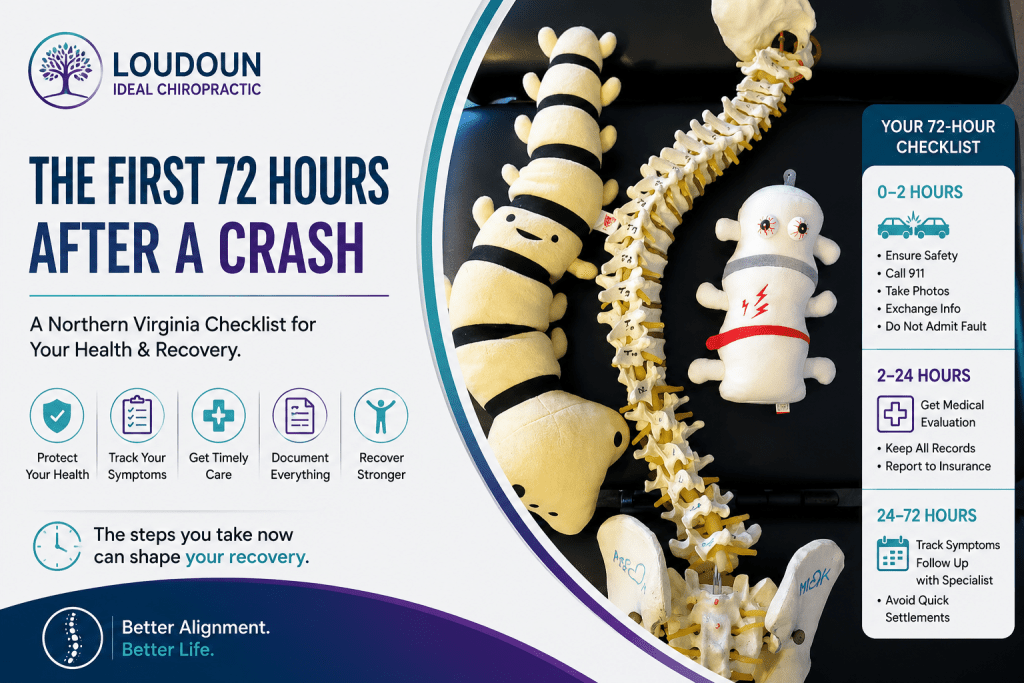
The First 72 Hours After a Crash: A Northern Virginia Checklist
Have you ever felt shaken up after a sudden car collision? The First 72 Hours After a Crash are critical for your health and safety. Body shock hides pain right after an impact occurs. People often skip medical visits because they feel fine initially.
You develop a stiff neck or backaches later at night, very gradually. You have a few tiny tear tissues that require immediate attention so that inflammation will not have any time to grow. The comprehensive checkup gives you a chance to notice spine disease early. You follow an easy path that leads you to take appropriate medical steps promptly. This page advises you to use your insurance plan safely.
Critical Early Steps for Your Spine and Safety
Top Steps to Take Immediately After a Car Crash Within 72 Hours. Most people are unaware that the 72 hours immediately following a vehicle crash are pivotal in determining the physical, financial, and legal recovery that one may face. High adrenaline levels produced during and immediately after the crash often mask severe physical injuries, including neck injuries (whiplash), concussions, and other unseen injuries; thus, it is important to seek medical attention even if you appear fine immediately after.
Hour 0–2: At the Scene
- Always prioritize safety-move off the road and survey everyone present to ensure everyone is okay and note any injuries present.
- Always call 911 and file for an official police report to add your incident as an official report.
- Take as many pictures as possible-take a variety of pictures from many different angles, including photos of your car’s damage as well as the surroundings, including skid marks and traffic signs if they are there. Don’t forget to take pictures of anyone you may see who has a physical injury, if anyone is presented with this issue.
- Make sure you and everyone involved have taken the appropriate action to obtain each other’s name, license plate number, and driver’s license/phone number; don’t forget to also make sure you have witnessed the facts provided.
- Do not admit fault or try to place official blame on the other vehicle-be polite, just explain what happened and what you know and that is it.
Hour 2–24: Medical Check & Reporting
- Get assessed: Head to the ER or an urgent care, even if you think you’re OK. Adrenaline and endorphins can mask the pain of soft-tissue injuries for several hours.
- Keep the documents: Do you know where to store all your discharge and doctor’s notes, your diagnostic films or X-rays, a written description of how you got injured, etc.? If it becomes apparent later that the injured part really hurts, and you will be seeking more serious treatments, you need this to prove the extent of your soft tissue injury.
- Inform the insurance companies: The best first few steps to take after this incident are getting it insured and also getting notified by both parties’ insurance (at no fault on the other vehicle driver’s insurance), so notify them that a soft tissue injury occurred and tell your car insurance company you got involved in such an incident. You should be notified by both insurance companies or insurance claim adjusters. Do not give your own insurance company recorded or speculated explanations about who is at fault or what “may have happened.”
Hour 24–72: Symptom Tracking & Follow-Up
- Keep a journal: Date all notes concerning your pain, restrictions of motion, bruising, headaches, and mental cloudiness.
- Visit specialists: If you develop pain and stiffness after new muscle spasms subside and swelling intensifies, visit an injury specialist.
- Don’t settle immediately: When a release for cash or an offer to settle the case comes from the opposing driver’s insurer, don’t sign it without having a realistic estimate of all medical and vehicle repair expenses.
Things to Do Immediately At the Crash Scene
Staying calm at the road shoulder protects your safety. Here are five simple steps for those first minutes.
- Safety Check: Move your car off active road lanes if possible. Turn on hazard flashing lights to alert oncoming traffic.
- Car accident injury steps: Call emergency services right away to report the collision. Request an official police officer to write a full report.
- Photo Evidence: Take picture shots of all car damage up close. Capture street signs, weather, and tire marks on asphalt.
- Info Swap: Write down names, numbers, and insurance policy details. Collect contact information from any nearby people who watched.
- Whiplash symptoms after a crash: Keep your comments brief when talking with other drivers. Avoid saying sorry or discussing who caused the collision.
What Happens to Your Spine During an Impact
Car impacts push your body in ways nature never planned. Sudden force strains neck joints and spinal discs easily.
The Physics of Whiplash
Your head snaps back and forward in milliseconds. Muscles stretch past normal limits during this fast snap. Small tears occur in soft neck tissues very fast.
Hidden Internal Trauma
Body shock releases chemicals that block early pain. You might feel fine right after the collision happens. Soreness usually starts once your body calms down later.
Spinal Disc Strain
Hard bumps shift lumbar spine bones out of line. Spun discs press on nearby spinal nerve roots. A comprehensive spine collision evaluation catches tiny misalignments before they grow worse.
Common Mistakes in the First 24 Hours
People often make simple errors during the first day. Avoid these five common choices to protect your well-being.
- Skipping Care: People skip emergency visits because no bones broke. Hidden tissue strain needs early physical checks by a professional.
- Delayed back pain after a car accident: People wait weeks to mention small neck aches. Early documentation links physical complaints directly to the vehicle crash.
- Loose Paperwork: Throwing away clinic discharge notes causes record gaps. Keep every car crash medical report and visit paper in one folder.
- How long to rest after a crash: Talking to insurance representatives without notes causes confusion. State facts clearly without guessing about your physical injuries.
- Fast Release: Accepting quick settlement cash closes your claim early. Unseen spine problems may require long-term physical care.
How Muscle Guarding Affects Post-Crash Recovery
Your body locks muscles near hurt joints to protect them. This natural reaction limits normal movement after a crash.
Understanding Muscle Tightness
Tense back muscles clamp down around affected joints. This tight grip stops further damage during the early days. But long muscle spasms reduce blood flow over time.
Identifying Delayed Soreness
Swelling grows slowly over the first two days. You may wake up on day two with stiffness. Watching for delayed crash symptoms helps you act quickly.
Managing Initial Stiffness
Resting quietly helps soothe early physical stress and spasms. Avoid heavy lifting or intense exercise during this window. Gentle walking keeps blood flowing without straining injured tissues.
Documenting Your Symptoms and Recovery Steps
Tracking daily changes during the First 72 Hours After a Crash builds clear medical history records. Write down every area of discomfort in a simple notebook. Note how neck tightness affects your sleep or working hours.
Patients often ask how long to rest after crash events happen. Resting for two days helps calm your nervous system down. However, staying in bed too long causes severe whiplash joint stiffness.
If you notice delayed back pain signs after a car accident, visit a specialist. Using a car accident injury steps checklist protects your health. Tracking whiplash symptoms after crash days ensures nothing gets missed.
Understanding Medical Evaluation Timelines
Getting checked quickly ensures subtle joint problems get noticed early. Medical teams evaluate your full spine structure after impact.
Emergency Room Visits
Hospital emergency rooms check for broken bones and bleeding. They make sure your life is not in danger. They often send you home with basic pain pills.
Specialist Follow-Up Visits
Chiropractic care focuses on joint movement and alignment. Specialists look at soft tissue strain and spine position. They build an auto accident care plan to help you move without pain.
Tracking Progress
Keep track of how your body feels each day. Note which movements cause tightness in your lower back. Sharing these details helps your doctor adjust your care.
Long-Term Effects of Untreated Soft Tissue Strain
Ignoring small neck aches leads to bigger problems later. Early care stops soft tissue strain from turning permanent.
Scar Tissue Growth
Injured muscles heal by laying down rough scar tissue. Unmanaged scar tissue makes muscles stiff and less flexible. Structured soft tissue injury recovery guides muscle fibers to heal correctly.
Posture Shift Problems
When one side hurts, your body tilts away. This uneven stance puts extra weight on opposite joints. Over time, poor stance causes new pain areas.
Chronic Joint Stiffness
Joints that do not move right lose healthy fluid. Stiff spinal joints wear down faster over the years. Restoring joint motion protects your spine long-term.
Navigating Insurance Communications Safely
Talking with insurance reps requires clear, calm facts only. Protect your health record by keeping statements completely accurate.
Sticking to Known Facts
Only describe what you directly felt and saw happen. Do not guess about car speeds or impact angles. If you do not know an answer, say so.
Handling Recorded Statements
Insurance callers may ask for recorded voice phone interviews. You can ask to speak later after consulting care experts. Never rush into giving statements while taking strong medication.
Organizing Your Records
Keep every claim number written down in your folder. Save emails from insurance representatives in a safe folder. Good records prevent confusion during your recovery care process.
Practical At-Home Steps for Early Comfort
Taking gentle care of your body at home speeds recovery. Simple daily choices reduce early physical stress after impacts.
Ice and Heat Balance
Use cold ice packs on sore areas early. Ice calms down fresh swelling during the first two days. According to Trauma Care Guidelines, proper injury management lowers long-term complications. Switch to gentle heat later to loosen tight back muscles. Check out our Whiplash Treatment page for extra guidance.
Gentle Neck Movements
Avoid sharp or sudden head turns while sore. Slowly turn your chin side to side within easy limits. Gentle movement stops neck joints from locking up tight.
Proper Sleep Support
Sleep on your side with a pillow between your knees. Use a supportive neck pillow to keep your spine straight. Good rest supports post-crash physical recovery and repairs damaged tissues.
How Loudoun Ideal Chiropractic Can Help You
Loudoun Ideal Chiropractic helps you recover during the First 72 Hours After a Crash. Dr. Miok Hyoun brings over twenty years of experience. She works in Lansdowne and holds Whiplash Traumatology certification. Our office uses objective checks to evaluate spine trauma correctly. We combine postural analysis with digital image scans when needed.
We help families heal without surgery or heavy drugs. Dr. Miok builds custom care plans for your recovery goals. Our gentle care restores alignment and reduces physical stress safely. Visit our Dr. Miok Hyoun, DC page to read her credentials. Call 571-707-8639 to book your spine evaluation.
Conclusion
Taking smart steps during the First 72 Hours After a Crash protects your physical health and long-term legal rights. Always seek prompt care, track symptoms in writing, and collect full insurance records. Following a clear plan helps you recover safely and handle claims smoothly without unnecessary stress.
Frequently Asked Questions
What is the first thing you do after a crash?
Check yourself for injuries and move to safety. Call 911 immediately to report the vehicle collision to police. Exchange basic contact and insurance details with other drivers.
How long does it take to feel normal after a car accident?
Mild soreness often resolves within two to four weeks. Deeper soft tissue strain takes several months of care. Consistent physical support helps speed up full recovery times.
What are the three stages of a crash?
The first stage is the car impact against an object. The second stage is the human body moving against vehicle belts. The third stage is internal organs shifting inside your body.
How many days should you rest after a car accident?
Rest quietly for one to two days after impact. Light walking should begin soon after to prevent joint stiffness. Avoid heavy lifting or hard workouts until cleared by doctors.
What are delayed symptoms after a car accident?
Delayed symptoms include neck stiffness, headaches, and lower back pain. You might also notice arm tingling, brain fog, or sleep trouble. These issues appear as swelling grows over days.